
Flooring Has a Commoditization Problem. Here’s How Dealers Escape It.
July 2026 · 9 min read · by BON Flocked Flooring
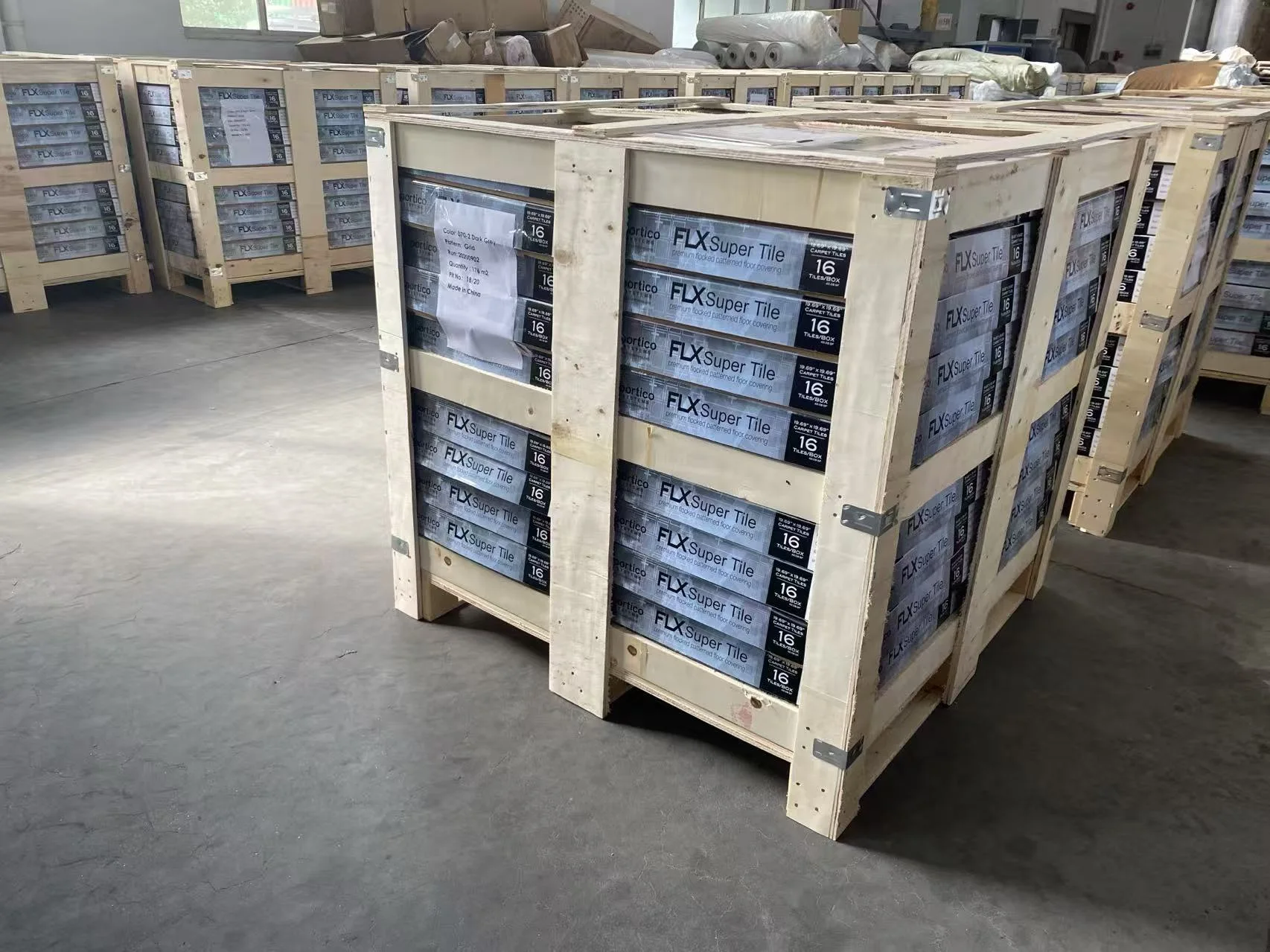
Walk down any flooring street in any city and you’ll see the same shop five times: LVT by the pallet, laminate by the bundle, carpet tile in the same six greys. When every dealer sells the same product, the only thing left to compete on is price — and the industry’s own numbers show where that race ends. This article lays out the data behind the squeeze, and the escape route that a small number of dealers are quietly taking.
The squeeze, in numbers
Industry statistics from Floor Covering News and Floor Daily for 2024–2025 tell one consistent story:
Carpet
Sales fell 4% in 2025 to $7.23bn; residential down over 5%. Losing share to resilient for a decade.
Hardwood
Down ~31% in dollars and ~35% in volume over three years — the lowest levels since 2011–2013.
Laminate
Down 16.8% in dollars across two years; share sliding as imports decline.
LVT / vinyl
The "winner" — vinyl took 34.2% of the US market in 2024 and LVT overtook carpet for the first time. But it's exactly where import flooding, private labels and price wars concentrate.
The whole market
US flooring shrank in both 2024 (−3.5% volume) and 2025 (−3.1% volume). Everyone is fighting for a smaller pie.
Meanwhile the benchmark gross margin for a flooring dealer sits around 37% — and commercial work commonly runs below 30%. Every year of price war chips at that number, because the products on the shelf are interchangeable and the customer knows it.
Why it happened
- Identical products. The LVT boom pulled hundreds of factories into the same click-plank formats. Analysts now describe the market as a commoditized, high-volume core under persistent margin pressure.
- Private label at the big boxes. Home-improvement chains sell house-brand floors that undercut the brands dealers carry — and set the price expectation for every customer who walks into an independent store afterwards.
- Import flooding at the entry level. Low-cost commodity PVC and entry-level LVT keep pouring into every major market, resetting the floor price again and again.
- Perfect price transparency. A customer can screenshot your quote and have three cheaper ones by dinner. For commodity SKUs, the internet finished what oversupply started.
Tariffs make the commodity trap worse
For US-bound goods, Chinese-made LVT and SPC now carry a stacked duty burden of roughly 40% — the 25% Section 301 tariff (in place since 2018, with flooring excluded from exemption lists) plus MFN and baseline layers. Here’s the part that matters for a dealer: a tariff on a commodity product cannot be absorbed, because the margin was already stripped to the bone by competition. It lands straight on the shelf price of a product your customer can price-check anywhere, squeezing you from both ends.
A differentiated product wears the same tariff differently. When the customer can’t comparison-shop the item — because nobody nearby sells anything like it — pricing is anchored to the value of the floor, not to a commodity benchmark. The duty becomes a line item, not a death sentence.
The escape route: sell what the street doesn’t
Sell what the street doesn't
A category with near-zero local competition can't be price-checked against ten identical quotes. Scarcity is margin.
Sell a story, not a spec sheet
"Soft like carpet, washable like vinyl, printable with any design" is a pitch a client remembers — and one no commodity box can copy.
Own the brand
Private label turns you from a reseller into a product owner. Nobody can undercut "your" line, because nobody else has it.
Sell a specification, not a commodity
Flocked flooring has been a premium commercial spec in airports, hospitals and offices for decades. A category with that standing is priced on performance, not on a per-box race.
Where flocked flooring fits
Flocked flooring is the category we make: around 80 million upright nylon 6.6 fibres per square metre, bonded electrostatically to an impervious backing. It reads as a textile floor — warm, quiet, slip-resistant — but wet-mops and wears like a resilient one, and it takes unlimited digital print. The category has been a premium commercial specification in airports, hospitals and offices for decades — proven in the buildings that punish floors hardest, and priced accordingly.
What it never became is a shelf commodity. Very few suppliers carry a flocked floor at all. For a dealer or contractor, that’s the whole pitch in one line: a proven, premium-anchored category that your competitors don’t stock and can’t quickly source. Our own production runs in an international airport terminal, a Japanese telecom retailer’s 100,000 m² store rollout, university campuses and play centres — see the project write-up.
Two ways to take it on
- Distribute the BON brand. Regional enquiries from this site referred to you, marketing assets and stock ranges ready to quote from day one.
- Private label / OEM. The same floor with your name on it — your packaging, your colour cards, your pricing. We stay invisible; the line is yours. We’ve produced under partner brands for the US and Japanese markets for years.
Either way the economics are the point: factory-direct supply from the maker (since 2003), custom digital print with no tooling cost, and MOQ from 500 m². Pricing is quoted per order — quantity, format, design — which is exactly how a differentiated product should be priced: on value, not on a commodity index. Full details on the distributor & partner page.
The one-paragraph summary
The flooring market shrank two years running; carpet, hardwood and laminate are all losing dollars; the growth category (LVT) is the most commoditized shelf in the building-materials trade; and tariffs are piling cost onto products with no margin left to give. You will not out-discount that spiral. The dealers who escape it are the ones who add a category the street doesn’t have — and flocked flooring, with a premium European benchmark and near-zero local competition, is one of the few left.
FAQ
Why are flooring margins shrinking?
Three forces stack up: most dealers sell the same commodity products (LVT, laminate, standard carpet), so buyers comparison-shop on price alone; big-box private labels undercut branded lines; and low-cost imports keep flooding the entry level. Industry benchmarks put the average flooring dealer's gross margin around 37%, with commercial work often below 30% — and the commodity core keeps compressing.
How do tariffs affect flooring dealers?
For US buyers, Chinese-made LVT and SPC carry a stacked duty burden of roughly 40% (MFN + Section 301 + baseline tariffs). On commodity products with razor-thin margins, that cost can't be absorbed — it turns into price increases on goods the customer can price-check anywhere. Differentiated products handle tariffs better because their pricing isn't anchored to a commodity benchmark.
What is flocked flooring and why is it less commoditized?
Flocked flooring is a dense layer of upright nylon 6.6 fibres bonded to an impervious backing. It feels like textile but cleans and wears like a resilient floor, and it can be digitally printed with any design. Very few suppliers carry the category at all, which means a dealer who adds it isn't competing on a price-per-box that ten rivals also quote.
Can I sell flocked flooring under my own brand?
Yes. We manufacture flocked flooring and supply it two ways: distribute the BON brand with regional enquiries referred to you, or private-label the same floor under your own name — your packaging, your colour cards, your pricing. OEM production for brands in the US and Japan has been part of our business for years.
What's the minimum order to start?
MOQ is from 500 m² for stock designs or your own custom print. Pricing is quoted per order based on quantity, format and design. Samples are available so you can judge the product before committing.
Free PDF
Get the Flocked Flooring Buyer’s Guide
Construction, certifications, customisation options, lead times and what really drives cost. Leave your email and we’ll send the guide over.