
Flooring for Churches, Mosques and Places of Worship: a Zone-by-Zone Guide
October 2026 · 7 min read · by BON Flocked Flooring
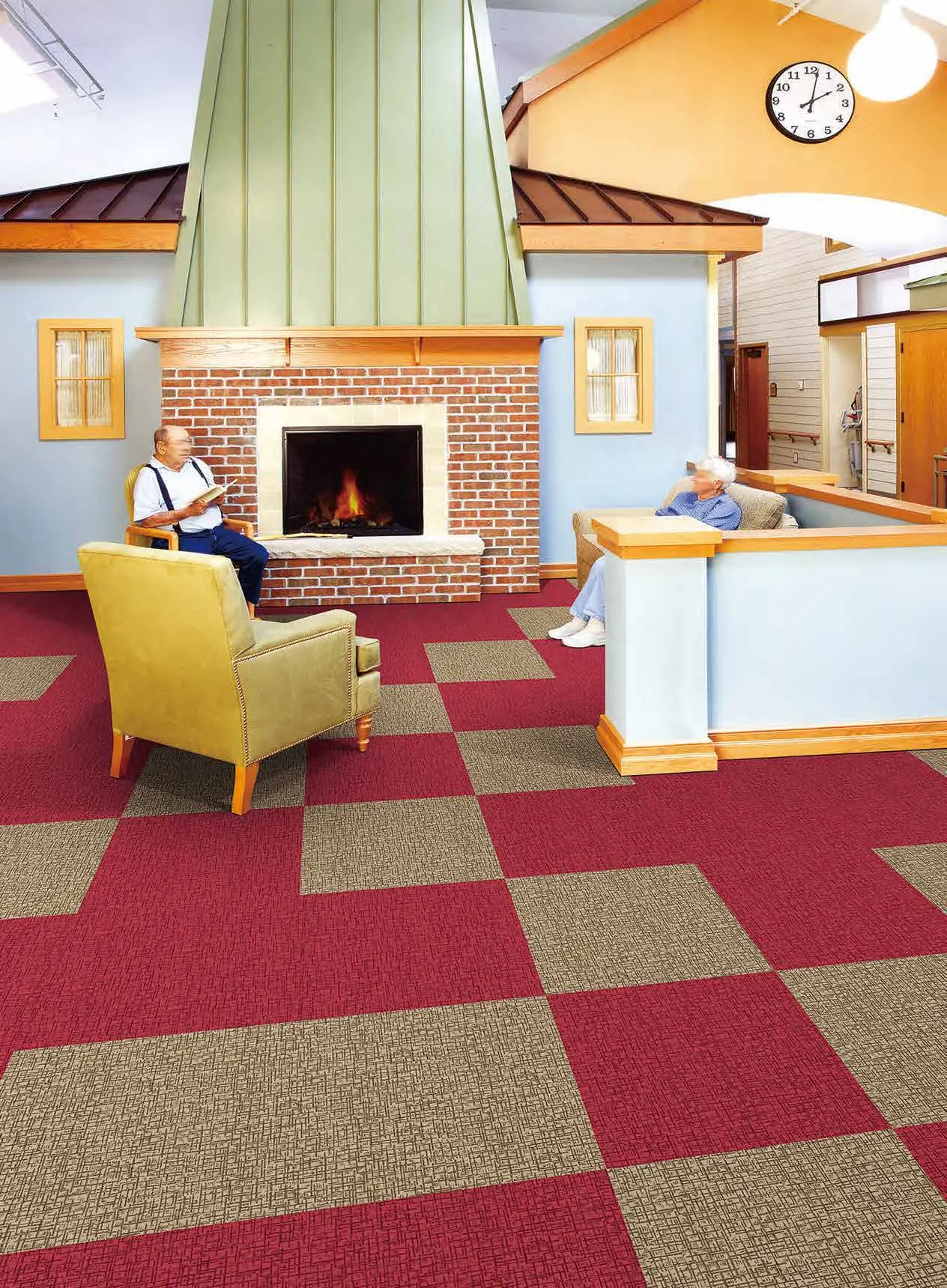
The short answer
Floor a place of worship zone by zone. Entrances need a matting system that stops water and grit at the door. Aisles, seating, prayer halls and the sanctuary are where a textile floor belongs: footsteps are quieter during a service, it is warm for kneeling and sitting, and it can carry a design made for the building. Flocked flooring is a dense nylon 6.6 textile surface on an impervious backing, so it wet-cleans instead of soaking up spills. It cuts impact sound (ΔLw 21 dB, ISO 10140-1 / 717-2, SGS), is classified Bfl-s1 for fire (EN 13501-1) and measures 0.45 for slip resistance (EN 13893).
What it is not: it does not reduce the echo of the hall, which is a ceiling and wall question. It is not a floor for kitchens or toilets. And it is not cushioned safety surfacing.
A place of worship asks more of a floor than most buildings do, and asks it in short bursts. For most of the week the hall is quiet. Then a full congregation arrives within ten minutes, sits, stands and kneels for an hour, and leaves through the same doors. During the service a single pair of hard heels on stone can be heard by everyone. Afterwards there is coffee in the hall, candle wax at the front and rain at the entrance. This guide goes through a church, mosque or community hall one zone at a time and lists what to put in the brief.
Zone by zone
| Zone | What the floor has to handle | Flocked flooring? |
|---|---|---|
| Entrance, porch and foyer | Rain, grit and wet coats from everyone arriving at once. | An entrance matting system first, then the floor beyond it. |
| Aisles and circulation | The whole congregation in a few minutes, the same route every week, footsteps heard during the service. | Yes: quieter underfoot than stone or vinyl, and wet-cleanable. |
| Seating and pew areas | People kneeling, sitting and standing for long periods; dropped hymn books and kneelers. | Yes: warm underfoot, and tiles cut neatly around fixed pews. |
| Prayer hall | People sitting and prostrating on the floor, often without shoes; rows to be kept straight. | Yes: prayer rows, borders and direction printed into the floor. |
| Sanctuary, chancel or platform | The focal point of the building, seen by everyone. | Yes, with a design made for the building. |
| Fellowship hall | Tables, chairs, coffee after the service, events during the week. | Yes for the hall; keep the kitchen a hard floor. |
| Children’s rooms | Children on the floor, spills, crafts. | Yes: see the childcare guide. |
| Kitchens and toilets | Standing water and grease. | No. Use a hard, wet-area floor. |
Children’s rooms and crèches have the same brief as a nursery, covered in the childcare flooring guide.
The entrance decides how the rest of the floor looks
Most of the dirt a church floor ever sees comes through the doors on wet shoes. The cheapest way to keep aisles and seating areas looking new is to stop that dirt at the entrance: a recessed or surface entrance matting system, long enough that several steps land on it before anyone reaches the main floor. The textile floor starts beyond it. Skipping the matting to save budget is the most common reason a new floor looks tired by the second winter.
Quiet during the service, and what a floor cannot do
There are two kinds of noise in a place of worship. Footsteps are impact noise: on stone, tile or vinyl they are loud where they happen and carry through the building. A textile surface is markedly quieter underfoot, and flocked flooring is tested to an impact sound reduction of ΔLw 21 dB. That is the difference between latecomers being heard by the whole congregation and not.
Reverberation is sound lingering in the room after it is made. It is controlled by ceilings, walls and soft furnishings, not by the floor, and in a church it is often wanted for music and singing. A flooring supplier who promises to fix the echo is overselling. The longer explanation is in what acoustic flooring actually does.
Kneeling, sitting and prostrating
In many places of worship people are in direct contact with the floor: kneeling in a church, sitting and prostrating in a mosque prayer hall, sitting on the floor for a children’s talk. A textile surface is warm in a way stone is not. It also has to be clean, which is where a conventional carpet struggles: what is spilled or tracked in soaks into its backing. Flocked flooring has a sealed backing, so the whole floor can be wet-mopped, extraction-cleaned or steam-cleaned on a regular cycle.
A floor that belongs to the building
Because flocked flooring is digitally printed, the floor can be designed for the building rather than chosen from a catalogue. In a mosque, the prayer rows, borders and the direction of prayer can be printed into the floor, so rows stay straight without separate rugs. In a church, an aisle runner, a border around the sanctuary or a motif taken from the windows can be part of the floor. There is no tooling cost, so a design made for one building costs the same to produce as a stock pattern. See how custom printed floors are made.
Cleaning after a full congregation
Vacuum after services and spot-clean spills the same day; wet-mop, extraction-clean or steam-clean periodically, more often in the entrance zone and the fellowship hall. For candle wax, let it harden, lift it off gently with a blunt plastic scraper and vacuum the pieces; do not try to melt it out with an iron. The full routine is in how to clean flocked flooring.
Tile format makes repairs simple: a damaged tile in an aisle is lifted and replaced from spare stock between services. Order a few percent of spare tiles from the same production batch and keep them in the building.
Fire, slip and the documents a building committee will ask for
Places of worship are assembly buildings, so a fire classification is usually required; confirm the class with the local authority or fire engineer. BON flocked flooring is classified Bfl-s1 to EN 13501-1 (SGS), with ASTM E648 data for North American projects on request. Slip resistance is 0.45 to EN 13893 (SGS), above the 0.30 threshold for low slip potential, which matters where older members walk. Formaldehyde was not detected in SGS testing to GB 18587, and our carpet tile holds CRI Green Label Plus certification for indoor air. The dated report for the batch supplied comes with the order. For writing these into a tender, see how to specify flocked flooring.
A brief for the building committee
- Draw the zones first: matting at the doors, textile in aisles, seating, prayer hall and sanctuary, hard floor in kitchens and toilets.
- Budget for an entrance matting system at every external door.
- Ask for impact sound reduction (ΔLw) for the floor, and treat hall reverberation as a separate decision for an acoustician.
- Ask for reaction to fire to the class your authority requires, and slip resistance, for the batch supplied.
- Decide whether the floor carries a design: prayer rows, an aisle runner, a border or a motif.
- Specify a cleaning routine the volunteers or contractor can actually keep.
- Order spare tiles from the same batch.
- Check the subfloor: level, dry and sound. The floor is bonded with adhesive and needs no underlay; see the installation page.
Buying for a church or mosque
Our minimum is 500 m² per colour, because each colour is its own production run; custom colours and custom prints need the full 500 m². Many halls are smaller than that: tell us the area and we check which in-stock designs are available below the minimum. Samples are free and the buyer pays the courier: send your courier account number, or we quote the freight before shipping. Stock designs typically take a few weeks to produce, custom prints around 4 to 8 weeks. Most building committees buy through a local contractor, and our page for contractors covers how they order.
FAQ
What is the best flooring for a church?
Most churches use more than one floor. Entrances take rain and grit, so they need an entrance matting system and a hard or matting floor. Aisles, seating areas and the sanctuary are where a textile floor earns its place: footsteps are quieter during a service, it is warm for kneeling and sitting, and it can carry a design for the building. Flocked flooring is one textile option for those zones: dense nylon 6.6 on an impervious backing, so it can be wet-cleaned instead of absorbing spills.
Will a new floor make the church less echoey?
Not on its own. A floor reduces impact and footfall noise: ours is tested at ΔLw 21 dB (ISO 10140-1 / 717-2, SGS). The reverberation of a large hall is airborne sound and is controlled mainly by ceilings, wall treatment and soft furnishings. Many churches want some reverberation for music and singing; that is a decision for an acoustician, not a flooring supplier.
What flooring suits a mosque prayer hall?
A prayer hall needs a clean, warm surface that people sit and prostrate on, usually without shoes, and many halls want the prayer rows marked in the floor. Flocked flooring is digitally printed, so row lines, borders and the direction of prayer can be printed into the floor itself, with no tooling cost. The impervious backing lets the whole floor be wet-cleaned regularly.
What flooring is best for a church entrance?
An entrance matting system first: a recessed or surface mat long enough to take water and grit off shoes before they reach the main floor. A textile floor can follow beyond the matting. Most of the dirt a church floor ever sees comes through the doors, so the matting decides how the rest of the floor looks.
Does church flooring need a fire rating?
Usually, because places of worship are assembly buildings; check the requirement with the local authority or fire engineer. BON flocked flooring is classified Bfl-s1 to EN 13501-1 (SGS). ASTM E648 data for North American projects is available on request, and the dated report for the batch supplied comes with the order.
How do you remove candle wax from flocked flooring?
Let the wax harden, then lift and break it off gently with a blunt plastic scraper and vacuum the pieces. Do not try to melt it out with an iron: direct, concentrated heat can damage the pile. Treat any colour left behind as a spot stain, as described in our cleaning guide, and test on a spare tile first.
Free PDF
Get the Flocked Flooring Buyer’s Guide
Construction, certifications, customisation options, lead times and what really drives cost. Leave your email and we’ll send the guide over.