
Acoustic Flooring: What It Actually Does for Office & Commercial Noise
July 2026 · 7 min read · by BON Flocked Flooring
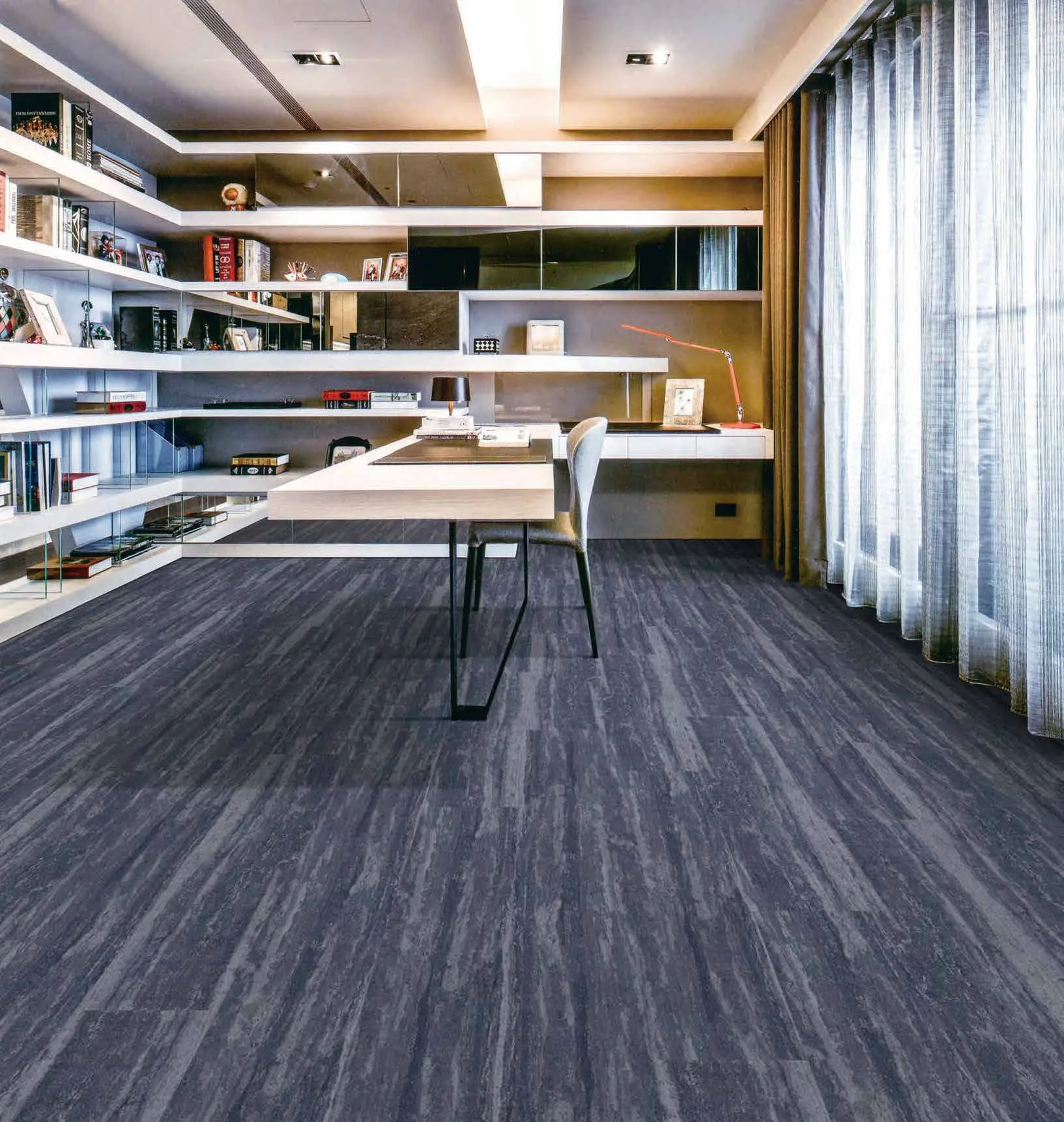
The short answer
Acoustic flooring reduces impact noise — footsteps, rolling chairs, dropped objects — both at source and in how much of it reaches the room below. The figure that describes this is ΔLw, tested to ISO 10140; BON flocked flooring is tested at ΔLw 21 dB (SGS). A soft textile surface is also markedly quieter underfoot than LVT or tile, which is what people notice walking an open-plan office.
What it does not do is fix echo, reverberation or voices carrying. Those are airborne noise, controlled by acoustic ceilings, wall panels, screens and soft furnishings — not by the floor. Any floor sold as a way to “soundproof” a room on its own is being oversold. Ask a supplier for a ΔLw figure, not an “acoustic” label.
Acoustics is now one of the top drivers of a commercial flooring spec — open plans, hard ceilings and glass have made noise a headline complaint. So “acoustic flooring” gets searched a lot. But it’s also widely misunderstood, and getting it wrong wastes budget. Here is the honest version: what a floor can and can’t do about noise, what the numbers mean, and how to specify a floor that is genuinely quieter without giving up cleaning and durability.
First, the honest part: a floor fixes one kind of noise
There are two very different noise problems in a building, and a floor only addresses one of them. Confusing them is the most common — and most expensive — mistake in an acoustic spec.
| Kind of noise | What it is | Is it the floor’s job? |
|---|---|---|
| Impact / footfall noise | Footsteps, rolling chairs, dropped objects — the noise the floor itself makes and passes to the room below. | The floor's job. A soft surface is quieter at source; a tested floor covering cuts transmission below (ΔLw). |
| Airborne noise & reverberation | Voices, phones, the echo of a hard empty room bouncing off surfaces. | NOT mainly the floor's job. Controlled by acoustic ceilings, wall panels, screens and soft furnishings. |
The floor’s job is impact and footfall noise — the sound of people walking, chairs rolling, things being dropped. It is not the main fix for echo and reverberation; that boominess in a hard, empty room is airborne noise, and it’s controlled by acoustic ceilings, wall panels and soft furnishings. Any floor sold as a way to “soundproof” a room or kill echo on its own is being oversold. A good floor is one layer of a quiet space — the layer under your feet.
What flocked flooring actually delivers
On the part of the problem a floor can solve, flocked flooring performs on two fronts. First, at source: it’s a dense layer of nylon 6.6 fibres, so walking on it is markedly quieter than walking on a hard floor like LVT or tile — the difference you hear the moment you step off a corridor onto carpet. Second, in transmission to the room below: it is tested to an impact-sound reduction of ΔLw 21 dB (SGS, ISO 10140-1 / 717-2), meaning footsteps and impacts are heard far less on the floor beneath. That is the honest, measured acoustic contribution — footfall quiet, not echo removal.
Quiet vs everything else you need from the floor
| Floor | On noise | The trade-off |
|---|---|---|
| Ordinary carpet | Quiet underfoot | Stains, mats in traffic, can't be truly washed — acoustics at the cost of durability & hygiene |
| LVT / vinyl / tile | Easy to clean, hard-wearing | Hard and loud underfoot — the opposite of what an acoustic spec wants |
| Flocked flooring | Quiet footfall + ΔLw 21 dB impact reduction, AND wet-cleanable, castor-proof | A premium textile floor — quiet without giving up cleaning or durability |
The reason flocked flooring keeps appearing in acoustics-led specs is that it’s the one soft floor that doesn’t force a trade with cleaning and durability. For the wider workplace picture see our office & workplace flooring guide.
Where a quiet floor earns its place
- Open-plan offices & coworking — constant movement; footfall quiet is felt all day, and the floor still has to take chair castors.
- Hotel corridors & rooms — footsteps overhead are a top guest complaint; impact-sound reduction matters directly.
- Education — classrooms and libraries where footfall noise is a distraction.
- Healthcare & aged care — calmer wards and corridors, on a floor that also wet-cleans.
How to specify it (without being misled)
- Ask for the ΔLw impact-sound reduction figure (tested to ISO 10140) — that’s the real acoustic number for a floor. Ours is ΔLw 21 dB.
- Don’t expect the floor to fix reverberation/echo — budget for acoustic ceilings and wall treatment for that.
- Confirm the floor also meets your non-acoustic needs: cleanability (impervious backing), chair-castor durability, fire (Bfl-s1, EN 13501-1) and slip (EN 13893, CoF 0.45).
- Consider custom print — an acoustic floor can still carry your brand or wayfinding at no tooling cost.
FAQ
Does acoustic flooring reduce echo in a room?
Mostly no — and it's important to be honest about this. Room echo and reverberation (the boominess of a hard, empty space) are airborne noise, and they are controlled mainly by ceilings, walls and soft furnishings, not by the floor. A floor's real acoustic job is impact and footfall noise. Any supplier claiming a floor alone will "soundproof" a space or kill echo is overselling it.
What noise does flooring actually reduce?
Two things. First, footfall noise at source: walking on a soft textile surface is quieter than walking on a hard floor like LVT or tile. Second, impact-sound transmission to the room below: BON flocked flooring is tested to an impact-sound reduction of ΔLw 21 dB (SGS, ISO 10140-1 / 717-2), meaning footsteps and dropped objects are heard far less on the floor beneath. That is what a floor contributes to a quieter building.
Is flocked flooring good for open-plan office acoustics?
For the footfall part of the problem, yes — a dense nylon 6.6 textile surface is much quieter underfoot than a hard floor, which matters in open plans where people move constantly. But acoustics is a whole-room problem: pair the floor with acoustic ceilings, screens and soft surfaces to also control airborne noise and reverberation. The floor is one layer of the solution, and the one that also has to survive chair castors and daily cleaning.
What is ΔLw and why should I ask for it?
ΔLw (weighted reduction of impact sound pressure level) is the standard figure for how much impact/footfall noise a floor covering stops from reaching the room below, tested to ISO 10140. It's the number that actually describes a floor's acoustic performance. Ask for it — not a vague "acoustic" label. BON flocked flooring is tested at ΔLw 21 dB.
Carpet is quiet too — why choose flocked flooring?
Ordinary carpet is quiet underfoot but stains, mats in traffic and can't be properly washed. LVT cleans easily but is hard and noisy. Flocked flooring gives the quiet-footfall benefit of a textile floor and the wet-cleanable, hard-wearing behaviour of a resilient one — so you don't trade acoustics against durability and hygiene.
Free PDF
Get the Flocked Flooring Buyer’s Guide
Construction, certifications, customisation options, lead times and what really drives cost. Leave your email and we’ll send the guide over.